
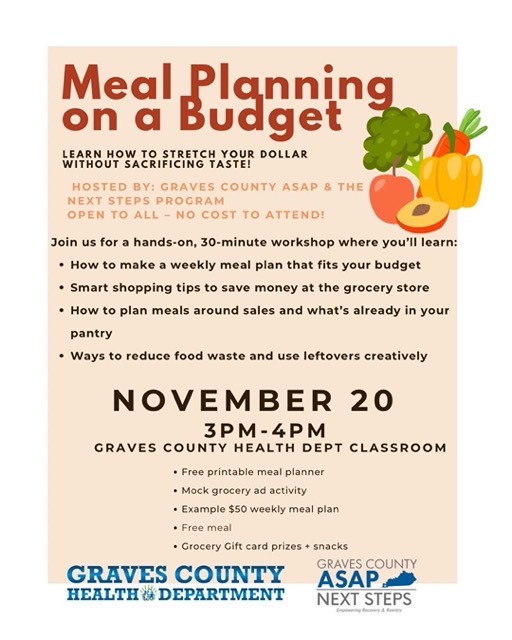
Graves County families looking to stretch their grocery dollars and reduce mealtime stress will soon have access to practical tools and support. The Graves County ASAP and the Next Steps Program are hosting a free hands-on meal planning workshop on November 20, from 3 to 4 p.m. in the Graves County Health Department classroom.
The session is open to everyone and focuses on helping families create affordable weekly meal plans, shop strategically, reduce food waste, and make the most of what they already have at home. Participants will receive a free printable meal planner, take part in a mock grocery-ad activity, review an example $50 weekly meal plan, enjoy a free meal, and have the chance to win grocery gift card prizes.
Courtney Jeffries, executive director of Graves County ASAP, says the workshop addresses more than budgeting — it supports stability, confidence, and prevention at the community level.
“Families are facing real challenges right now with grocery prices and SNAP cuts,” said Jeffries. “Learning how to meal plan is prevention too. It helps reduce stress, create structure, and build confidence. We work with people every day who are just trying to make ends meet — maybe someone fresh out of rehab, or a single mom stretching twenty dollars for two weeks after paying rent and bills. Offering classes like this gives people tools and support to feel more stable, and that stability is what prevention looks like in real life.”
Jeffries added that Graves County ASAP hopes participants walk away with a renewed sense of control.
“We hope people walk away feeling more empowered and less overwhelmed,” she said. “Prevention isn’t just about saying no — it’s about giving people skills that make life a little easier. When families feel supported and have tools to thrive, it creates a ripple effect of stability and connection that helps prevent substance use before it starts. Prevention doesn’t start in school; it starts at home.”
She emphasized that prevention must address real-life needs.
“Prevention isn’t one size fits all. It’s food stability, it’s a safe place to lay your head at night, and it’s knowing someone cares enough to help you get there. Sometimes that looks like a class on meal planning. Sometimes it’s help finding housing, transportation, or even just someone to listen,” Jeffries said. “All of those things matter. When basic needs are met, people have the chance to focus on their recovery, their goals, and their families. Everyone deserves a second chance, and prevention is about creating those opportunities. It’s about helping people rebuild with dignity and reminding them that their story isn’t over.”
Organizers say the program is designed to offer both practical skills and emotional support — a combination they hope will help families feel more secure and more connected as they navigate rising costs and changing needs.