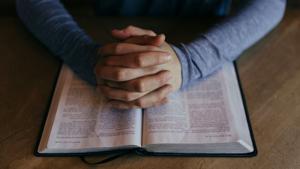
The U.S. Department of Education has issued guidance on prayer in public schools, outlining requirements that are tied to federal education funding.
The guidance states that no public school, teacher or school official “should ever coerce or pressure a student to engage in speech or affirm a viewpoint that would violate the student’s sincere religious beliefs.”
In a statement, U.S. Secretary of Education Linda McMahon said the guidance reaffirms constitutional protections for religious liberty.
“Our Constitution safeguards the free exercise of religion as one of the guiding principles of our republic, and we will vigorously protect that right in America’s public schools,” McMahon said.
According to the department, the updated guidance addresses three key First Amendment protections: the right of parents and students to freedom of speech, the right to practice religion freely, and the obligation of public schools to avoid establishing or endorsing religion.
The guidance follows President Donald Trump’s remarks in September at the Museum of the Bible in Washington, D.C., where he said the department would issue new direction on prayer in public schools.
After Trump announced the guidance, the Freethought Caucus issued a statement expressing concern that the federal government could appear to favor one religion.
“This guidance helps erode the Establishment Clause, blurring the lines between private and school-sponsored prayer, and create a less inclusive environment for students of diverse faiths or no faith,” the caucus said in a statement. The group added that other actions by the Trump administration “may appear to endorse one religion over others.”
Those in support of the guidance say it clarifies existing law and protects constitutional rights.
In an exclusive interview with The Center Square, Jeremy Dys, senior counsel and chair of First Liberty Institute’s Education Practice Group, said the updated direction reflects longstanding constitutional principles.
First Liberty represented former high school football coach Joseph Kennedy in Kennedy v. Bremerton School District, a 2022 U.S. Supreme Court decision that held a public school district violated the First Amendment when it disciplined Kennedy for praying on the Washington state field after games.
“What the guidance has done well is point back at the 250 years of American history that point to welcoming religion even inside our public schools and allowing students to freely exercise their faith on campus, but to have their consciences protected when they do,” Dys said.
Dys added the prayer-in-school guidance by the Biden administration claimed to call for neutrality, but rather restricted religious freedom in public schools.
“Neutrality does not mean that you can silence religious speech and somehow create a neutral sphere,” he added. “That’s actually hostility towards religion.”
Dys said school officials should ensure that students and teachers can exercise their constitutional rights while on campus.
“The job of school officials everywhere, and every professional educator, is to maximize the freedom for its students and teachers to be able to walk through the schoolhouse gates without shedding a single part of their constitutional rights,” he said.
Under Section 8524(b) of the Elementary and Secondary Education Act, local educational agencies must certify in writing to their state educational agency that they do not have policies preventing constitutionally protected prayer in public elementary and secondary schools as a condition of receiving federal funds.
ESEA funds are federal grants provided to state and local educational agencies to supplement K-12 education, particularly for high-poverty and at-risk students.
The Center Square previously reported that in Arizona, public schools could risk losing federal funds if they fail to comply with requirements to protect constitutionally protected prayer and religious expression.
State departments of education are required to submit annual reports to the U.S. Department of Education detailing how school districts are complying with the updated guidance.
The Center Square reached out to the American Civil Liberties Union and Interfaith Alliance for comment, but did not receive a response.